
Read Huntington County's Current Roll
Start with the Huntington County Beacon parcel report. Its Owner (Auditor) field names the assessment-roll party. The card around that name carries the parcel facts that tell you whether you have the right land. Read the whole thing.
| Owner (Auditor) | Current name carried on the assessment roll |
|---|---|
| Mailing Address | Destination for owner and tax correspondence |
| Property Address | Situs assigned to the parcel, if one exists |
| PIN and Tax ID | Keys linking assessment, map, and tax records |
| Legal Description | Lot, block, section, tract, or other land identity |
| Class and District | Assessment class and local tax geography |
An owner of record is not an occupant. One Huntington County example paired a trust owner with a Muncie mailing address and a 350 W situs. That looks odd at first glance. The roll makes sense only when you read the legal description, parcel key, and address lines as one picture.
Separate Huntington Owner Address Lines
Owner (Auditor), situs, and mailing address each answer a different question. The first names the party on the roll. The situs labels the land itself, though vacant acreage may carry only a partial address. The mailing line shows where notices go, and it may point to a trustee, agent, company, bank, or an owner living far away.
The legal description is the durable cross-check. City land often turns on subdivision, lot, and block. Rural deeds lean on section-township-range or metes and bounds. A ZIP never sets city limits, and a mailing city does not fix a tax district. Keep PIN punctuation and leading zeroes exactly as recorded.
- Assessment roll
- The administrative parcel, owner, and value record.
- Situs
- The property's physical address label.
- Recording lag
- Time between a deed filing and a later roll update.
- Owner of record
- The party currently named by the relevant public record.
Test Current Huntington Owner Data
Huntington County publishes no fixed Beacon refresh interval and no standard deed-to-roll delay. A fresh deed can reach the Recorder well before the Auditor updates the roll. Treat the current owner field as a strong lead. It is not proof that no newer conveyance exists.
Compare the roll name against the latest grantee and note the recording date. Inspect inactive parcels too. For splits or combinations within two years, the Treasurer advises that the owner's last name may find the parcel more reliably. When an old PIN fails, search the name and legal description across the results.
Freshness check. The roll can lag a sale. The newest matching recorded deed may carry the more current Huntington County owner.
Confirm Huntington County's Current Owner
Verification links the roll to the Recorder's permanent land-record trail. Huntington County offers Tapestry for occasional paid access and Laredo for recurring subscription access. Counter service is also available. Use the name and parcel facts saved from Beacon. Then locate the newest instrument matching the land.
- Read Owner (Auditor), PIN, situs, mailing address, and legal description in Beacon.
- Search the Recorder by grantee, recent date span, and legal-description clues.
- Open the newest deed and compare its grantee and land description with the parcel.
- If the grantee is a company, compare its exact name with Indiana's INBiz entity record.
- Grantee
- The buyer or recipient named in a deed.
- Vesting
- The deed language stating how the grantee receives title.
- Registered agent
- A business contact, not proof that the agent owns the land.
Reach Huntington's Latest Owner Deed
The Recorder online-records service searches by grantor, grantee, date range, consideration, legal description, parcel ID, document number, and book/page. The Tapestry sheet prices a search at $5.95. Image viewing is included. Printed pages run $1 each. Laredo pricing is not posted.
At the counter, bring a party name. An approximate date works too. A PIN, legal description, instrument number, or book/page also helps. The Recorder sits in Courthouse Room 101 at 201 N Jefferson Street. Weekday hours run 8:00 a.m. to 4:30 p.m. Staff retrieve specified records but do not run title searches.
Note: Huntington County publishes no earliest online deed year, so ask which books or terminals cover an older parcel.
Check Huntington Entity Owner Lines
A trust in Owner (Auditor) does not put the land in its trustee's, beneficiary's, or mailing contact's personal name. Search any LLC by its exact spelling and suffix. Initials, punctuation, and former entity names can shift the results. The Indiana INBiz search confirms public business filing details and separates look-alike companies. It is a name-check tool, not an ownership record.
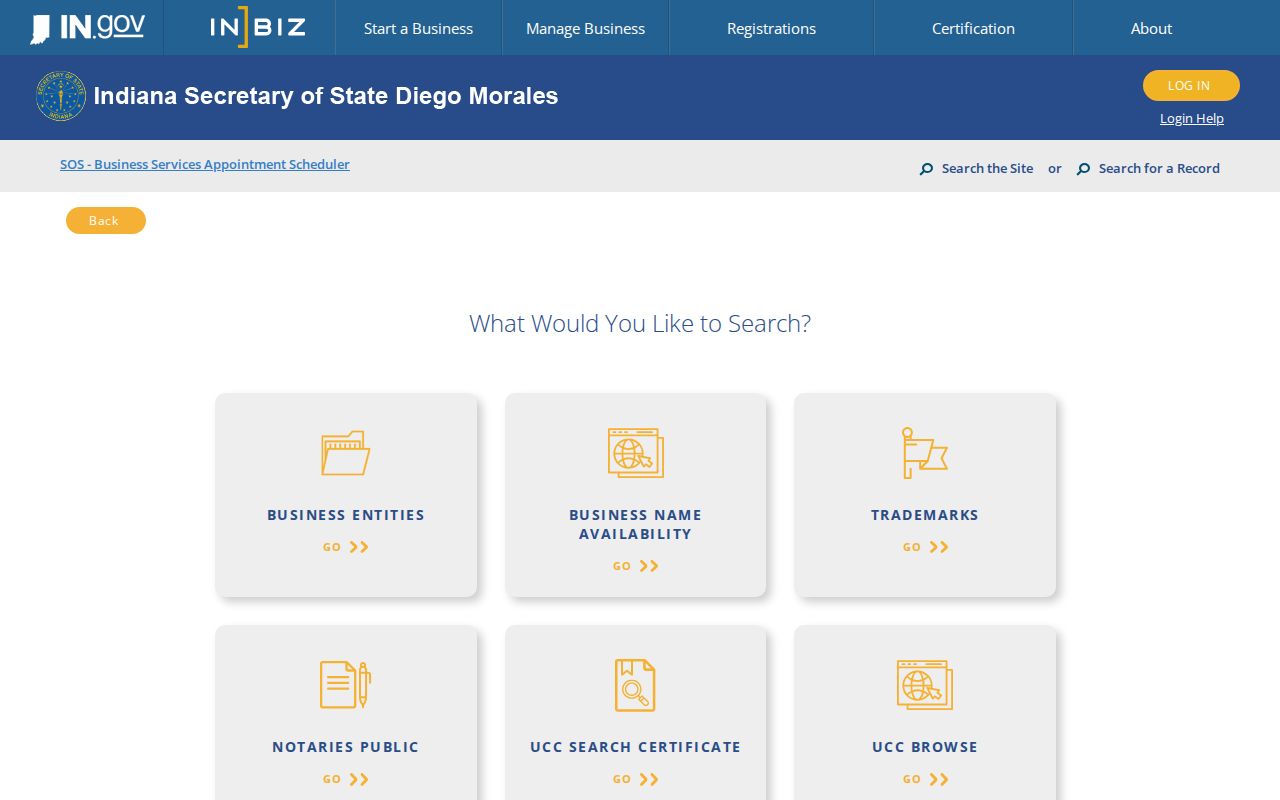
Match the entity's exact public name to the grantee wording. Then return to the deed for title. For an estate, pair the recorded transfer with the Huntington County Clerk's probate file when needed, since a death record alone conveys nothing.
Monitor Huntington Current Owner Filings
The Huntington County Property Fraud Alert sends free name-based notice of later recorded documents. A watched name gets an early signal when something is filed. The service does not block filing or judge validity.
A valid deed can trigger an alert. When a notice looks unfamiliar, review the instrument and contact the Recorder. Some owners hold several parcels. Property may also sit in a trust or company. Those owners should watch the exact name variants their records use.
Resolve Huntington Owner Parcel Changes
An owner check can fail simply because the land changed. Lot splits and combinations retire parcel numbers. Search by last name, then compare old and new legal descriptions and mapped shapes. The Treasurer itself suggests a name search for recent splits or combinations.
Recorded plats and county planning files add context. This helps when a line moved. It also helps when a new parcel appeared. The countywide DCD reviews line moves, new lots, plat amendments, and plat vacations. Beacon works as a reference map. The recorded plat or survey carries the stronger geometry.
Ask Huntington About Roll Updates
Timing questions work best with the Assessor. Ask whether the parcel's roll entry reflects the newest deed, or whether a correction record already exists. The office sits in Courthouse Room 102 at 201 N Jefferson Street, answers at (260) 358-4800, and keeps weekday hours from 8:00 a.m. to 4:30 p.m. Bring the current PIN, plus the old PIN if you have it, along with the deed date, grantee, and legal description. That package lets staff pull the right parcel fast. Frame the request around an existing roll or correction record rather than a custom ownership conclusion. Under Indiana APRA, IC 5-14-3, inspection during regular hours is free, though authorized copy costs may apply. After any split, combination, transfer, or situs change, a direct office check remains the safest step.
Contact a Huntington Owner Lawfully
The roll mailing address is your contact clue. It is public record for property matters. It does not prove the current owner lives at the parcel. A respectful letter should identify the land by PIN or legal description. It should state the issue plainly, without gathering unrelated personal facts. Indiana's Address Confidentiality Program lets qualified survivors use a substitute address. That safeguard deserves respect. Do not try to defeat it. For a purchase, easement, estate, or boundary matter, keep every inquiry tied to the parcel. Confirm key deed records with their custodians.
Lawful use. Current owner data supports legitimate property research. Never use it to watch, harass, threaten, or harm a person.
The wider route sits on the Huntington County owner lookup page. This card keeps to the owner of record as it stands right now.
Save Huntington Current Owner Evidence
Preserve the record as it appeared on the search date. Save or print the Beacon parcel report right away. Note the displayed PIN and Tax ID. Also note the latest deed's instrument number and recording date. A later refresh can change the roll. Those saved references let the Assessor, Auditor, or Recorder locate the same entries again. Never save just a cropped name. The legal description, situs, mailing line, parcel status, class, and tax district show why the result belongs to that land. For a trust or LLC, record the exact entity style too. This compact evidence set makes a later update easy to explain. It does not make a screenshot itself proof of title.