
Start a Huntington County Property Search
The fastest Huntington County property search starts with the fact already in hand. An address belongs in Huntington County Beacon. An owner name often works there too. A parcel number travels cleanly between Beacon, the Auditor tax list, and the Treasurer tax list. Deed party names go to the Recorder's Fidlar index. Write down the parcel number. Keep the exact owner wording too, because those keys join Huntington County property records stored in separate systems.
Each source answers a different question. Beacon describes the assessment parcel and places it on a reference map. The Recorder preserves conveyances and other recorded instruments, the Auditor maintains deductions and the tax roll, and the Treasurer handles bills, payments, delinquency, and tax-sale details. No screen proves marketable title or settles a boundary on the ground.
- Search Beacon by street address, owner, or parcel number and open the matching parcel report.
- Copy the parcel number, owner wording, legal-description clues, and tax district shown on the report.
- Use the owner as grantor or grantee in Tapestry or Laredo, then identify the latest conveyance.
- Check the Auditor or Treasurer list for the roll entry, bill trail, and split or combination warnings.
- Ask the custodian for a copy, older volume, or certified record when the web result is not enough.
Who Keeps Huntington County Records
No single desk holds the county's record trail. The Recorder serves as permanent keeper of deeds, mortgages, releases, assignments, plats, surveys, contracts, and powers of attorney. The Assessor tracks physical characteristics and assessed values. The Auditor maintains the tax roll and applies deductions. The Treasurer posts tax bills and payments. All of these offices work in or serve through the Huntington County Courthouse at 201 North Jefferson Street in Huntington.
Auditor and Treasurer
201 N Jefferson St
Huntington, IN 46750
County courthouse offices
Beacon Joins Huntington County Parcels
Beacon works best for an address-first Huntington County property search. Its search accepts owner, address, and parcel inputs. The selected parcel then opens into a report and map. A Huntington County parcel report carries a lot. Expect a formatted parcel number, alternate tax ID, neighborhood code, property and mailing addresses, acreage, class, tax district, the owner as carried by the Auditor, and a short legal description. Assessment and tax links follow when available.
Read the warnings alongside the data. The legal description is expressly not for legal documents. Digital data can change and settles no boundary. Some modules may sit blank for a given parcel, so treat the report as a collection of search keys rather than a final answer. The recorded plat, survey, deed, or office file answers the exact question.
Huntington Recorder Access Has Two Paths
The Recorder offers two ways in: the Recorder's online-records page points occasional users to Tapestry and frequent users to Laredo. Tapestry runs pay-as-you-go. A $5.95 search includes images. Printing runs $1 per page. Laredo is an account service for regular single-county work. The county page states no earliest online year. A blank web result therefore proves nothing about whether a deed exists, and that same county page carries the current remote-access details and office help.
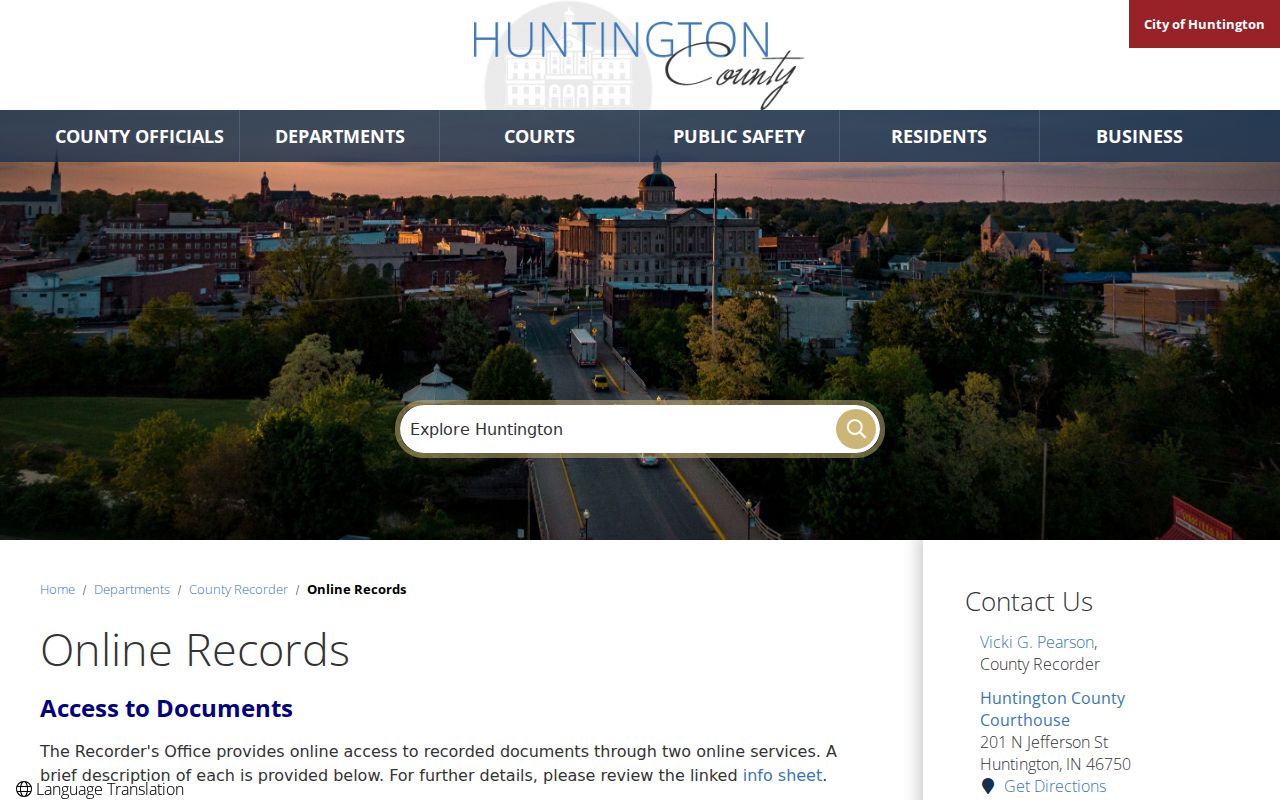
The Tapestry and Laredo links lead away from the county site, but the Recorder remains the source for copies and older record questions. Counter help still matters. Searches can run by grantor, grantee, document type, recording range, or parcel and legal-description clues, depending on the service. Contact the Recorder for a certified copy, a hard-to-read image, or a record beyond the web span. The office takes mail requests. In-person visits follow current fee rules.
Note: Write down spelling variants before paying for another search; older name indexes may place the same party under a different form.
Property Fraud Alerts in Huntington County
Recorded documents are public in Huntington County. That openness makes prompt review worth the effort. The free Huntington County Property Fraud Alert sends a notice whenever a name you save appears in a newly recorded document. A notice is a signal, not a verdict. Inspect the filing before drawing conclusions. Common names can trigger alerts about unrelated people, and an unexpected spelling may slip past a saved name entirely.
Enrollment blocks no deed and corrects no record. It also cannot replace title monitoring. A suspicious alert deserves a close comparison of instrument number, property description, parties, and recording date against known records. Then contact the Recorder with questions. The county's own material warns about fraudulent deeds and points residents back to the office, shortening the gap between recording and review. That speed is what makes the alert one of the most practical Huntington County property records safeguards available to owners.
Match Huntington County Records to Questions
Start with the question, not the first portal that loads. That habit keeps a Huntington County property search honest. Deed records answer who transferred what, and when. Mortgages, releases, and liens add the claims sitting against the parcel in the public land record. Assessment and tax files carry the rest of the story, from appraised value and deductions to the current tax bill and its payment status. For exact boundaries, plats and surveys beat any GIS map, while planning files may reveal a proposed subdivision even though approval there never proves work was finished.
| Record Type | What It Documents | Kept By | Access |
|---|---|---|---|
| Deeds and contracts | Transfers, parties, legal descriptions | Recorder | Fidlar services or office |
| Mortgages and liens | Recorded claims, releases, assignments | Recorder | Index, image, or copy request |
| Assessment and tax | Value, deductions, bills, payments | Assessor, Auditor, Treasurer | Beacon and tax lists |
| Plats and parcels | Lots, map location, subdivision context | Recorder and GIS | Beacon, plat, or survey |
| Planning records | Applications, zoning, proposed work | Local planning offices | Document center or direct request |
A title question needs the whole deed chain, not just the name on the tax roll. Value questions work differently. Start with the assessor's appraisal record. The tax bill then shows how local rates and deductions shaped the amount due. Boundary work has its own order. Orient with the parcel map, then move to recorded documents and, when lines are disputed, a licensed survey; the county-wide property search and the detailed Huntington County deed records process stay separate paths.
Tax Lists Need a Light Touch
The Treasurer and Auditor search pages take several keys. Enter a parcel number, owner name, property address, tax year, or district. Start with one strong key. The Treasurer's list warns that too many filters can narrow away the right result. It never displays more than the chosen result limit. A row shows the district, both parcel formats, and an inactive marker. It also lists the owner of record and the situs address. Confirming the balance means opening the record or contacting the Treasurer.
Parcel splits and combinations set another trap. When a parcel changed within the last two years, search by last name. That way every related tax bill surfaces. The online list also labels itself not for official use. Treat it as a route to the tax account. Obtain an office statement whenever proof of payment or delinquency will be relied on.
Huntington Deeds Reach Back to 1834
Huntington County does not say where its online deed index ends. The older trail is clear, though. The Indiana State Library microfilm finding aid lists general deed indexes for 1834 through 1902 and deed books beginning with Volume 1, covering 1834 to 1840. An online miss only begins the hunt. Huntington County deed records reach back to 1834.
The State Library's Huntington County map catalog opens a visual route into the county's plat-book holdings.
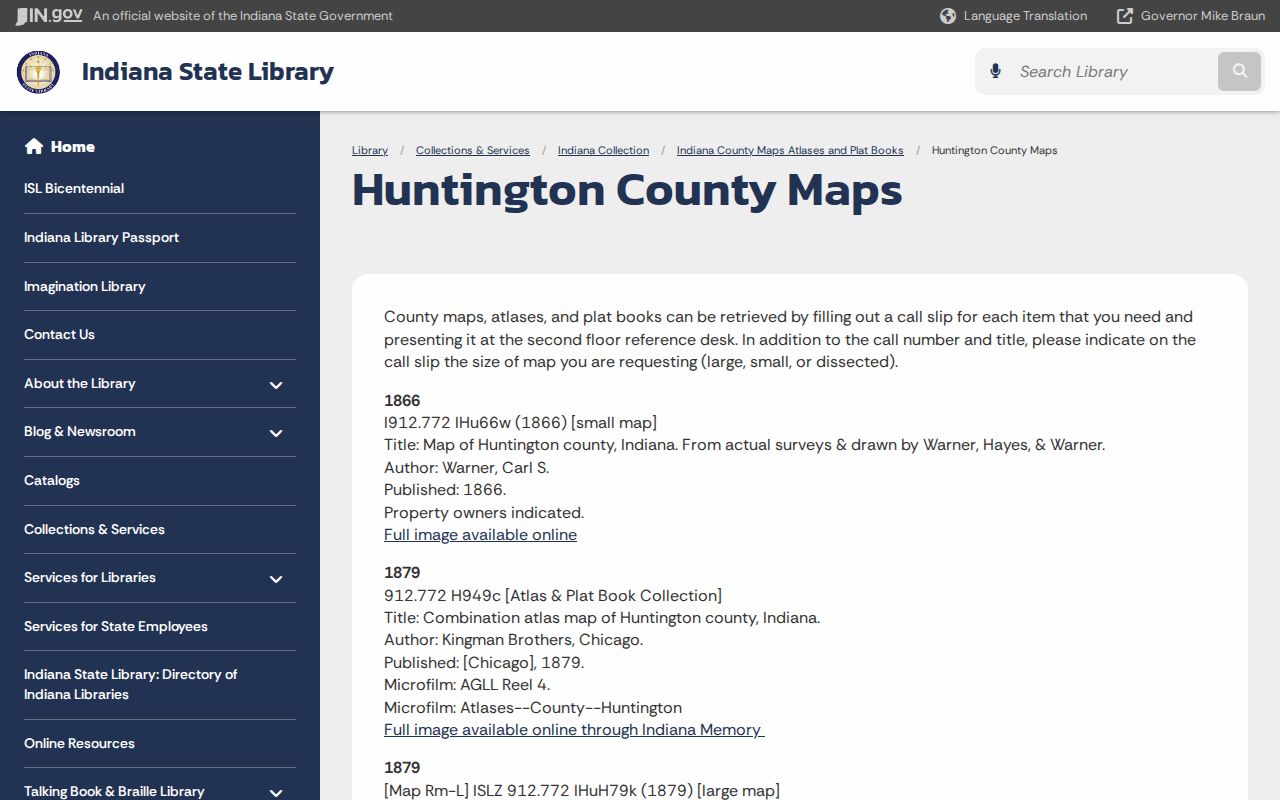
The catalog complements, but does not replace, the indexed deed books and Recorder originals.
Work backward from the current deed. Use each grantee's acquiring instrument to identify the prior grantor, then repeat. If the Fidlar index stops, ask the Recorder for the book and page route and consult State Library or affiliate access to the microfilm. Probate can interrupt a neat deed chain, so the Huntington County Clerk's estate files may be needed. The State Library county research guide also points to wills, marriages, WPA indexes, maps, and original-record custodians.
Historic key. Huntington County land records begin in 1834, while the county does not publish the starting year of its online deed index.
Parcel Lines Are Reference Lines
Beacon's GIS pairs parcel shapes with report data, but the county's disclaimer matters. A parcel outline is a reference aid. It helps identify adjoining parcels, township context, roads, and the record number worth pursuing. It cannot find a corner in the field. Occupation and a recorded description can conflict.
For subdivision land, pull the recorded plat. Compare its lot, block, easement, and right-of-way details against the map. The State Library's Huntington plat-book catalog holds editions from 2002, 2011, 2013, and 2024, useful for historical context rather than legal boundary proof. IndianaMap offers a statewide GIS fallback. When a line must be set on the ground, a surveyor is the right professional.
- Parcel
- A unit used for assessment and mapping.
- Plat
- A recorded drawing that creates or depicts lots and related rights.
- Situs address
- The property's physical location, which may differ from the owner's mailing address.
- Legal description
- The deed language identifying the land; a short tax description may not be enough for legal use.
Huntington Court Files Add Context
Some land events reach court first. Foreclosure, quiet-title, partition, probate, and judgment matters can explain a transfer or a claim against Huntington County land. Indiana MyCase searches public, non-confidential case information by case number, party, business, or attorney. Court, status, type, and date filters narrow results. The service caps results. MyCase is the official entry point for court research tied to Huntington County property records.
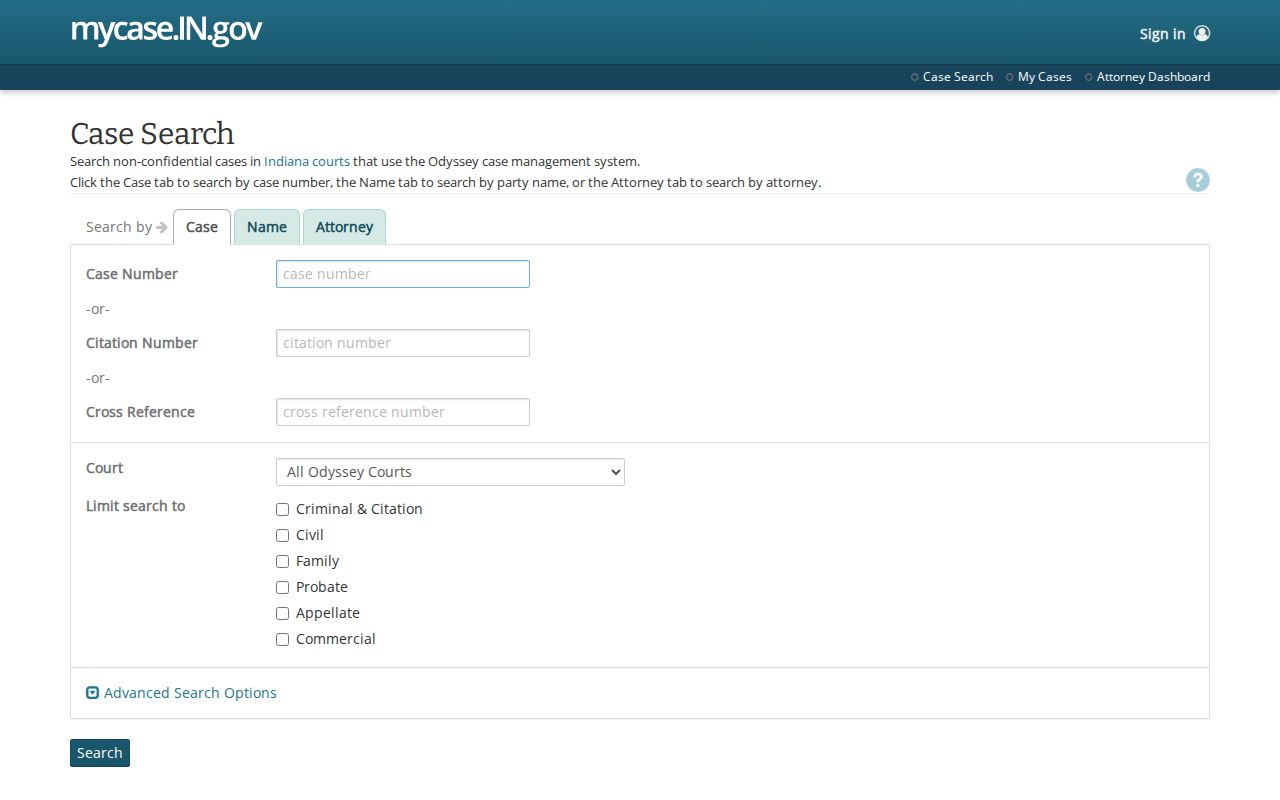
Use the party, case, and court controls first. The MyCase search tips explain name matching, filters, and result limits for narrowing the query before requesting the official file.
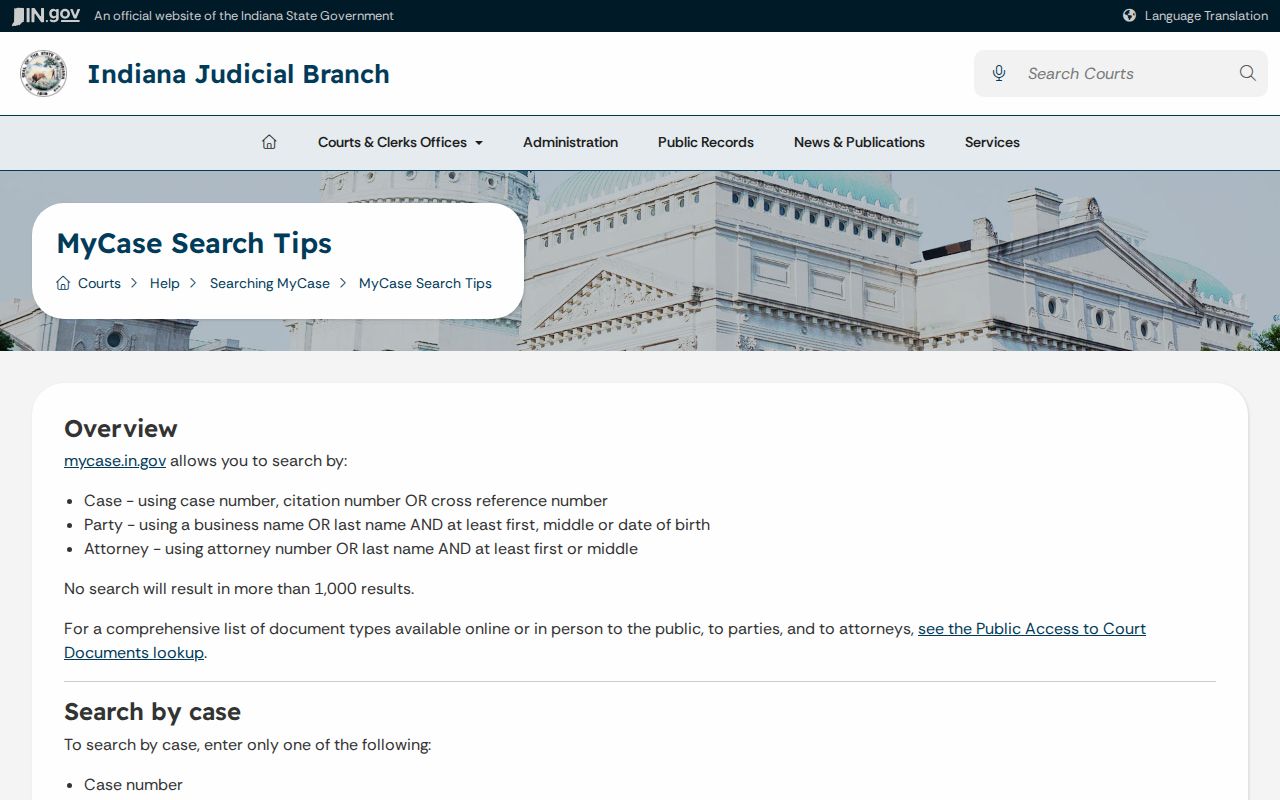
The online entry is not the official case file. Sealed, expunged, juvenile, and otherwise protected material can be absent or redacted, and document availability varies. The Huntington County Clerk maintains the official court record and provides copies. Search a business by its exact name. Wildcard and sounds-like tools help with people. Keep the case number handy. Then ask the Clerk for the docket entry that bears on the property.
Planning Files Use Parcel Clues
Huntington planning records add land-use context no parcel card shows. The city's minor-subdivision application captures the owner, surveyor, address, section, township, range, acreage, flood zone, subdivision, lot, current use, zoning, and parent parcel PIN. Those fields make it easy to cross-check which tract a proposal concerns. It is still an application. Approval and completed work are separate questions.
The city and county document center searches by title, document type, department, category, topic, year, date range, and keyword. It offers no address-keyed permit database. When the repository does not yield the file, contact the relevant planning office. Or make a focused request for an existing record under the Indiana Access to Public Records Act, Indiana Code 5-14-3. Name the address, parcel, project, document type, and likely date range. The date range matters most.
Public Access Beyond the Web
Not every Huntington County property record lives online. The Recorder counter handles recorded land instruments, and paid remote services extend that reach. The Assessor, Auditor, and Treasurer handle parcel, tax roll, and tax bill questions. Reach them by phone or in person. The Clerk holds official court and probate files. Mail and APRA requests open a path to existing records. The State Library can help. The Huntington City-Township Public Library can too. Microfilm, maps, directories, newspapers, and other local-history sources await there.
APRA guarantees the right to inspect or copy existing public records during regular agency hours. Lawful exceptions apply. It does not force an office to answer research questions or build a new report. Name the record with enough detail to locate it. Copy charges follow statute and actual-cost rules. Production comes within a reasonable time after acknowledgment. For old land work, gather names, rough years, township, and subdivision. Bring any book, page, or parcel number clue too.
Limits of Huntington County Property Records
Huntington County property records answer many questions. An assessment names an owner, a deed names a grantee, and the indexes show the instruments recorded against a party. They also carry assessed values, public tax details, mapped parcels, and planning or court records that survived disclosure rules.
The limits matter just as much. They will not name everyone living at an address. Huntington County property records do not disclose confidential records, certify that every claim was found, set a market sale price, or place a boundary monument. Verify each fact with the office that owns it. Request a certified deed or court copy when the document itself matters. An insured title conclusion belongs to a title professional. A field boundary belongs to a licensed surveyor. Indiana's Address Confidentiality Program voter guidance explains how qualified survivors can protect voter-address information.
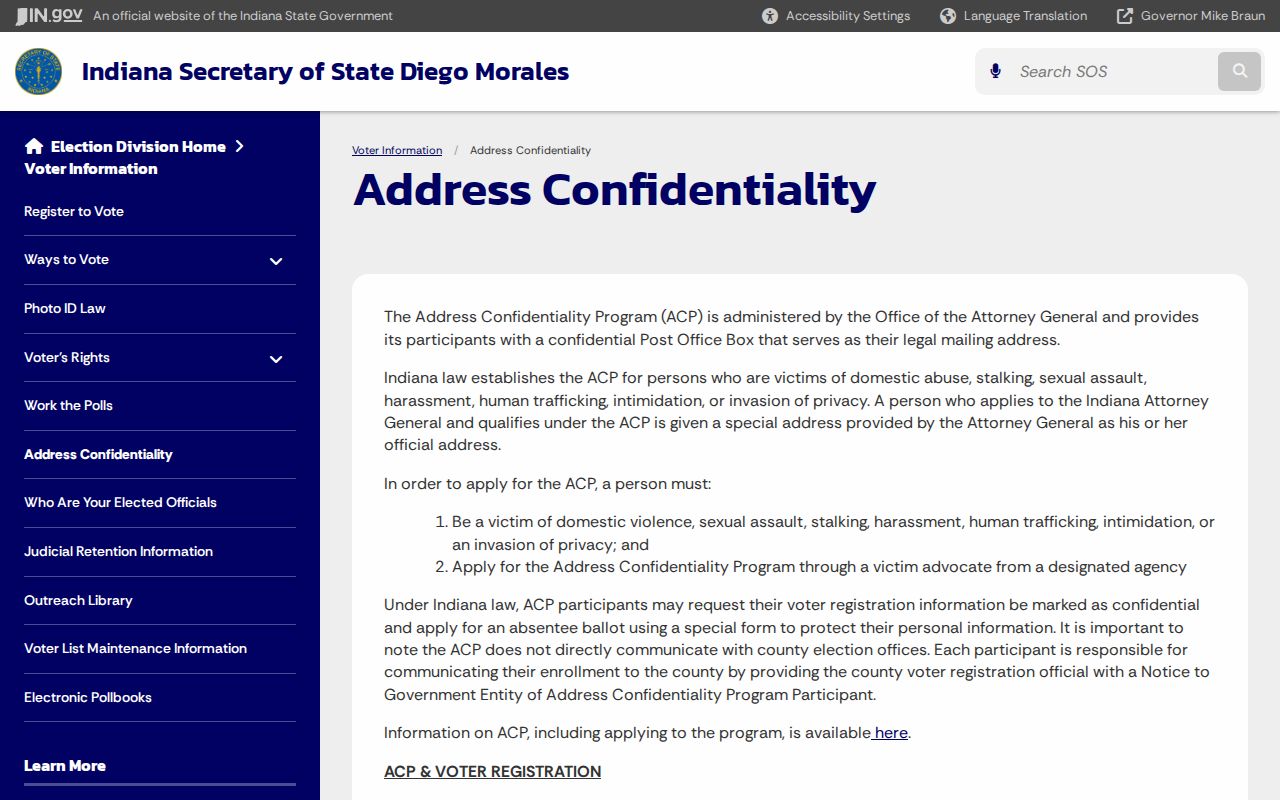
The protection leaves any public search incomplete on purpose.
Lawful use. Use public records for due diligence, boundaries, tax review, house history, and civic research. Never use owner information to stalk, harass, or harm anyone.