
Reconstruct Huntington County Former Owners
Every backward chain has the same shape. It opens with a live parcel and closes when an older index runs dry. Along the way, log the date, the parties, the deed type, and the exact citation at every single step.
| Transfer Date | Grantor to Grantee | Deed Type | Book/Page or Instrument |
|---|---|---|---|
| Newest match | Prior owner to current grantee | As indexed | Save exact reference |
| Earlier acquisition | Earlier owner to prior owner | As indexed | Match legal description |
| Historic-book entry | Earlier grantor to grantee | As written | Volume and page |
The legal description is the anchor. It keeps each transfer tied to the same land even when one person once held several Huntington County tracts under similar names.
Search Huntington Prior Owner Names
The Huntington County Recorder remote-access page steers casual users toward Tapestry and heavy users toward Laredo. Both accept grantor, grantee, date, consideration, subdivision, parcel ID, metes-and-bounds terms, document number, and book/page as search clues.
The Fidlar land-record gateway is the doorway that connects remote searchers to the participating county indexes.
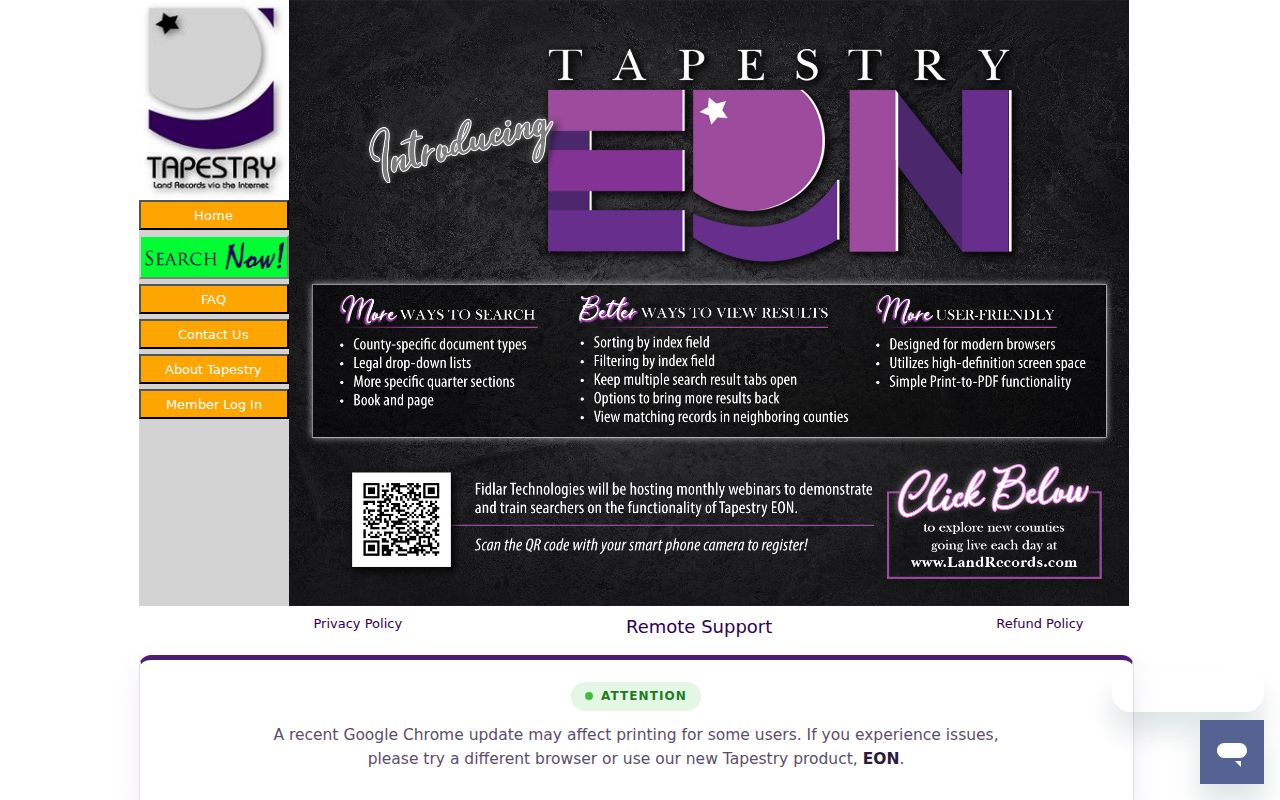
Treat the gateway as a launch point. Pick Huntington County there. Then lean on the Recorder's party and land fields to move the chain.
Spell names every which way. Try surname variants, initials, trust phrasings, and exact company spellings. Tapestry runs $5.95 per search, images included. Prints cost $1 per page. For a known instrument or older material, the Recorder counter is the fallback.
Walk Huntington's Deed Chain Backward
Here is the core move. The current grantee holds the key to the prior transfer. Search that party as grantee, pull the deed that conveyed the land, and read its grantor. That name is your next prior owner candidate.
- Find the current parcel and save its PIN and legal description.
- Locate the newest deed and capture its parties, date, type, and reference.
- Search that grantor as grantee in an earlier date range.
- Repeat while matching the land description, then move to books or film.
- Grantor
- The party transferring an interest.
- Grantee
- The party receiving it.
- Chain of title
- The ordered sequence of land transfers.
- Reverse index
- An index path arranged by grantee.
- Quitclaim deed
- A transfer without the warranties found in a warranty deed.
Carry Huntington Descriptions Back
Old records shrug off street addresses. For platted land, search by subdivision and lot/block terms. For rural tracts, use section-township-range calls and metes and bounds. The local sample PT NE SEC 16 22.42A shows how a durable description hides. It hides behind a short road situs.
A modern PIN can go dark after a split or combination. It may never appear on an old deed. Hold onto book/page and instrument numbers. Compare acreage and adjoining-owner calls. Pull plats whenever the chain shifts from a parent tract to individual lots.
Bridge Huntington Estate Owner Gaps
Prior owners can disappear from an ordinary sale sequence when title passed through probate, survivorship, a personal representative's deed, or a trustee's deed. Search those instrument types, then consult the Huntington County Clerk's probate file.
The Indiana vital-record order page shows the official routes for eligible requests.
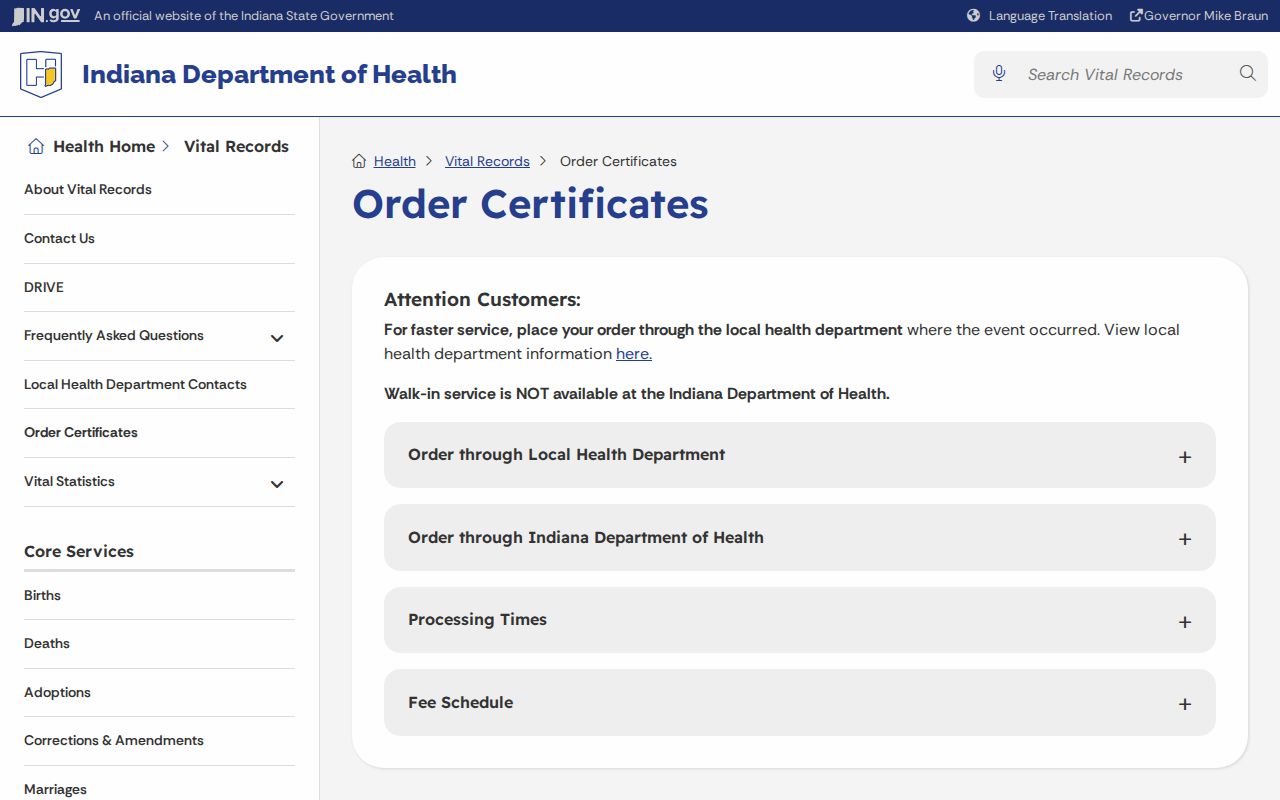
Rules govern access. The certificate supports identity and timing, nothing more.
Indiana MyCase may display public case information, yet the Clerk holds the official file. A death certificate, when access rules allow, can pin down a date of death. It still does not convey land. Tie the probate record to the recorded deed and its legal description before trusting the link.
Reach Huntington's 1834 Owner Trail
The county posts no earliest online Recorder year. The State Library microfilm guide confirms deed-index runs for 1834-1867, 1867-1883, 1883-1896, and 1896-1902. Deed Record Volume 1 spans 1834-1840, and Tract Book Volume 1 reaches from 1830 to 1853.
Ask the Recorder which volumes are scanned and which live only in books or film. No official account of a courthouse fire or destroyed deed run exists for the county. A failed name query proves nothing about burned records.
Coverage limit. The online cutoff is not published. Older former owners are found through books and verified microfilm.
Verify Huntington Former Owners Offline
Offline sources fill the gaps that deeds leave open. The State Library county guide points to the B. Joan Keefer center's holdings: directories reaching back to 1892 and running to the present, full newspaper microfilm, yearbooks, and business files. Old directories handle renamed streets. Newspapers explain transfers that look strange on paper.
One caution applies. A directory lists an occupant, not necessarily the owner of record. Check the name against deeds and the tax roll before trusting it. Legal notices often surface estates, auctions, sheriff sales, or plat action that account for an otherwise puzzling change in ownership.
Match Huntington Plats to Past Owners
Subdivision plats tell the story of how one parent tract turned into dozens of later lots. The State Library plat-book catalog covers Huntington County with editions from 2002, 2011, 2013, and 2024. Treat published plat books as a finding aid. For a legal description, the recorded subdivision plat at the recorder's office carries more weight.
County planning also tracks changes over time. These include boundary line moves, new parcels, plat amendments, and vacations. Watch for a chain that suddenly jumps from acreage figures to lot numbers. That shift means a plat created those lots. Find the creating plat before tracing the owners any further back.
Use Huntington Owner History Lawfully
Owner-history work serves real purposes. It powers house histories, estate matters, purchase diligence, and title research. It cannot prove occupancy or settle every lien, easement, and unrecorded claim.
Lawful use. Verify old deeds with their custodians, and never use former-owner records to stalk, threaten, target, or harass anyone.
For the mechanics of one deed, see the Huntington County deed records page. Owner history is the story here.
Plan Huntington Microfilm Searches
Microfilm planning pays off before you load a reel. Work the general index in reverse: begin with 1896-1902, then step back through 1883-1896, 1867-1883, and 1834-1867. Record the letter section, volume, page, grantee, grantor, and deed-book citation each time. A surname that lands near a boundary year may appear in two runs.
The earliest deed books follow set spans. Volume 1 covers 1834-1840; A-C cover 1834-1844; C-F cover 1844-1849; and F-I cover 1849-1853. Treat these ranges as finding aids, not as proof that every image is online. Confirm each deed in its own volume.
Resolve Huntington Historic Owner Identities
Names shift their shape along a chain. One deed index entry may use initials, another a spouse, a trustee, an estate caption, or a business name. Search both parties. Test spellings, and keep your date range narrow. Never merge two similar people unless the land description matches too. Directories and newspaper notices can separate identities when the deed index cannot. A directory may tie an occupant to a street in one year. Probate or sheriff-sale notices may name an estate or tract. Each source strengthens a link. The deed remains the transfer record that proves it.
Access Huntington Owner Books Directly
The Recorder's office sits in Room 101 at 201 N Jefferson Street. Hours are weekdays, 8:00 a.m. to 4:30 p.m. Bring names, dates, legal descriptions, and citations with you. Ask whether a terminal, scan, book, or film covers your period. Copies generally run $1 per page. Certification costs $5. Staff will retrieve documents you specify. They will not build the chain or resolve liens, so maintain the transfer table yourself and test each link.
Follow Huntington Historic Title Clues
Local place names can hold a clue a current street search misses. Warren's Tower Park code identifies land in Vestal C. Shaw's First Addition. That points to Huntington County Deed Record 90, page 413, from 1903. A separate historic image mentions Jones Third Addition. Treat these as leads toward a recorded land identity. They do not prove a full former-owner chain. Start with the cited volume and page. Transcribe the parties and legal description. Then move backward through the matching grantor-grantee index. If a later deed uses a new subdivision label, find the plat or ordinance connecting the names. This is why exact book/page citations and named plats outperform a modern address when you trace past owners. Roanoke adds a name-change caution. DLGF material for Villas of Roanoke preserves the earlier Villas of Kilsoquah label and a 2012 split or name history. Search both assessment-neighborhood names when a former owner appears tied to that development, but verify the actual parcel with the deed and the plat.
Cross-Check Huntington Prior Owners
A backward chain is strongest when two independent keys agree. First match the former owner's indexed name and transfer date. Then match the deed's legal description to the description carried into the next conveyance. Acreage, subdivision, lot, block, section, and adjoining-owner calls can expose a false name match. One family, trust, or company may hold several Huntington County parcels at once. That is when this matters most. Corrections and partial conveyances deserve extra care. A correction deed may fix a name or description without creating a new owner. A partial deed may transfer only part of the tract. The grantor keeps the balance. Follow both resulting land descriptions before declaring the prior owner left the whole property. Wording can turn unclear. Retrieve the full instruments from the Recorder then. Never rely on index summaries alone. Note every split and correction in your chain table. Estate deeds and plat references belong there too. Each one changes how the same land is described.